function printDiv(eh)
{
var divToPrint=document.getElementById(eh);
var newWin=window.open('','Print-Window');
newWin.document.open();
newWin.document.write('<html><body onload="window.print()">'+divToPrint.innerHTML+'</body></html>');
newWin.document.close();
setTimeout(function(){newWin.close();},10);
}
(function(c, l, a, r, i, t, y) {
c[a] = c[a] || function() {
(c[a].q = c[a].q || []).push(arguments)
};
t = l.createElement(r);
t.async = 1;
t.src = "https://www.clarity.ms/tag/" + i + "?ref=wordpress";
y = l.getElementsByTagName(r)[0];
y.parentNode.insertBefore(t, y);
})(window, document, "clarity", "script", "uguy8v1u4s");
var ajaxurl = 'https://www.ampmlock.com/wp-admin/admin-ajax.php';
/*! LoadCSS. [c]2020 Filament Group, Inc. MIT License */
/* This file is meant as a standalone workflow for
- testing support for link[rel=preload]
- enabling async CSS loading in browsers that do not support rel=preload
- applying rel preload css once loaded, whether supported or not.
*/
(function(w){"use strict";var wpacuLoadCSS=function(href,before,media,attributes){var doc=w.document;var ss=doc.createElement('link');var ref;if(before){ref=before}else{var refs=(doc.body||doc.getElementsByTagName('head')[0]).childNodes;ref=refs[refs.length-1]}
var sheets=doc.styleSheets;if(attributes){for(var attributeName in attributes){if(attributes.hasOwnProperty(attributeName)){ss.setAttribute(attributeName,attributes[attributeName])}}}
ss.rel="stylesheet";ss.href=href;ss.media="only x";function ready(cb){if(doc.body){return cb()}
setTimeout(function(){ready(cb)})}
ready(function(){ref.parentNode.insertBefore(ss,(before?ref:ref.nextSibling))});var onwpaculoadcssdefined=function(cb){var resolvedHref=ss.href;var i=sheets.length;while(i--){if(sheets[i].href===resolvedHref){return cb()}}
setTimeout(function(){onwpaculoadcssdefined(cb)})};function wpacuLoadCB(){if(ss.addEventListener){ss.removeEventListener("load",wpacuLoadCB)}
ss.media=media||"all"}
if(ss.addEventListener){ss.addEventListener("load",wpacuLoadCB)}
ss.onwpaculoadcssdefined=onwpaculoadcssdefined;onwpaculoadcssdefined(wpacuLoadCB);return ss};if(typeof exports!=="undefined"){exports.wpacuLoadCSS=wpacuLoadCSS}else{w.wpacuLoadCSS=wpacuLoadCSS}}(typeof global!=="undefined"?global:this))
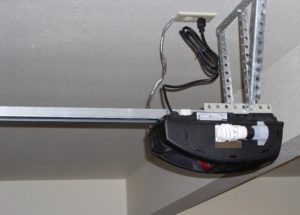
Garage doors are no longer the regular roll-top ones, which have to be pushed up by hand. These days, garage door openers are provided with various accessories to make opening easier. No matter how heavy the garage door, it can be fitted with the right kind of opener. These openers ensure utmost safety and security for garages under any conditions. They are also provided with several options and in various designs to suit the exact requirements of the user. The best thing is, they can be installed within 3-5 hours (even do-it-yourself ones). A professional can install a garage door opener in 1 hour!
Garage door openers are of two kinds depending on the use: residential and commercial. In the commercial range of garage door openers, the main models are: Trolley, Jackshift, Hoist and the Slide models. While Trolley openers are used for standard lifting on sectional doors, Jackshift is used for grilles, rolling doors and shutters. Hoist operators are similar to Jackshifts but they are also suitable for heavy duty industrial doors. The slide door openers are meant for single and bi-parting slide doors and also for fire doors.
The main step in purchasing a garage door opener is to determine the actual drive system. Garage door openers are of three kinds depending on the drive system: belt driven, chain driven and direct drive. The most important points to be considered in a garage opener system are the kind of motor and the horsepower. Garage door openers differ in speed also. The average speed is 7 inches lift/drop per second. There are openers that operate at even double this speed.
Garage door openers are provided with different kinds of warranties. Safety is another important aspect while choosing the right garage door opener. It is mandatory that all automatic door openers should be equipped with a non-contact invisible beam system that can sense the approach of a person and make the door to reverse back to the open position. Other mandatory features of garage openers are: automatic lights, a timed reversing feature, a manual emergency release cord and a force adjustment feature.
Garage door openers are usually noisy but some advanced models are being designed to be really quiet. Proper maintenance and lubrication would also lessen the noise made by garage door openers. On the whole, garage door openers should be weather resistant, safe, and should have the least wire exposure for long life.
Garage doors can also be operated by a remote control. This is especially useful for people who have homes with multiple garages. However, it is better to have a rolling radio signal code for the control as it is easy for thieves to capture the code from thin air. Garage door openers can also have an automatic light, remote control and a wall operator, as well as the option of single/two/three button transmitters.
(function( w ){
"use strict";
// rel=preload support test
if( !w.loadCSS ){
w.loadCSS = function(){};
}
// define on the loadCSS obj
var rp = loadCSS.relpreload = {};
// rel=preload feature support test
// runs once and returns a function for compat purposes
rp.support = (function(){
var ret;
try {
ret = w.document.createElement( "link" ).relList.supports( "preload" );
} catch (e) {
ret = false;
}
return function(){
return ret;
};
})();
// if preload isn't supported, get an asynchronous load by using a non-matching media attribute
// then change that media back to its intended value on load
rp.bindMediaToggle = function( link ){
// remember existing media attr for ultimate state, or default to 'all'
var finalMedia = link.media || "all";
function enableStylesheet(){
// unbind listeners
if( link.addEventListener ){
link.removeEventListener( "load", enableStylesheet );
} else if( link.attachEvent ){
link.detachEvent( "onload", enableStylesheet );
}
link.setAttribute( "onload", null );
link.media = finalMedia;
}
// bind load handlers to enable media
if( link.addEventListener ){
link.addEventListener( "load", enableStylesheet );
} else if( link.attachEvent ){
link.attachEvent( "onload", enableStylesheet );
}
// Set rel and non-applicable media type to start an async request
// note: timeout allows this to happen async to let rendering continue in IE
setTimeout(function(){
link.rel = "stylesheet";
link.media = "only x";
});
// also enable media after 3 seconds,
// which will catch very old browsers (android 2.x, old firefox) that don't support onload on link
setTimeout( enableStylesheet, 3000 );
};
// loop through link elements in DOM
rp.poly = function(){
// double check this to prevent external calls from running
if( rp.support() ){
return;
}
var links = w.document.getElementsByTagName( "link" );
for( var i = 0; i < links.length; i++ ){
var link = links[ i ];
// qualify links to those with rel=preload and as=style attrs
if( link.rel === "preload" && link.getAttribute( "as" ) === "style" && !link.getAttribute( "data-loadcss" ) ){
// prevent rerunning on link
link.setAttribute( "data-loadcss", true );
// bind listeners to toggle media back
rp.bindMediaToggle( link );
}
}
};
// if unsupported, run the polyfill
if( !rp.support() ){
// run once at least
rp.poly();
// rerun poly on an interval until onload
var run = w.setInterval( rp.poly, 500 );
if( w.addEventListener ){
w.addEventListener( "load", function(){
rp.poly();
w.clearInterval( run );
} );
} else if( w.attachEvent ){
w.attachEvent( "onload", function(){
rp.poly();
w.clearInterval( run );
} );
}
}
// commonjs
if( typeof exports !== "undefined" ){
exports.loadCSS = loadCSS;
}
else {
w.loadCSS = loadCSS;
}
}( typeof global !== "undefined" ? global : this ) );