function printDiv(eh)
{
var divToPrint=document.getElementById(eh);
var newWin=window.open('','Print-Window');
newWin.document.open();
newWin.document.write('<html><body onload="window.print()">'+divToPrint.innerHTML+'</body></html>');
newWin.document.close();
setTimeout(function(){newWin.close();},10);
}
(function(c, l, a, r, i, t, y) {
c[a] = c[a] || function() {
(c[a].q = c[a].q || []).push(arguments)
};
t = l.createElement(r);
t.async = 1;
t.src = "https://www.clarity.ms/tag/" + i + "?ref=wordpress";
y = l.getElementsByTagName(r)[0];
y.parentNode.insertBefore(t, y);
})(window, document, "clarity", "script", "uguy8v1u4s");
var ajaxurl = 'https://www.ampmlock.com/wp-admin/admin-ajax.php';
/*! LoadCSS. [c]2020 Filament Group, Inc. MIT License */
/* This file is meant as a standalone workflow for
- testing support for link[rel=preload]
- enabling async CSS loading in browsers that do not support rel=preload
- applying rel preload css once loaded, whether supported or not.
*/
(function(w){"use strict";var wpacuLoadCSS=function(href,before,media,attributes){var doc=w.document;var ss=doc.createElement('link');var ref;if(before){ref=before}else{var refs=(doc.body||doc.getElementsByTagName('head')[0]).childNodes;ref=refs[refs.length-1]}
var sheets=doc.styleSheets;if(attributes){for(var attributeName in attributes){if(attributes.hasOwnProperty(attributeName)){ss.setAttribute(attributeName,attributes[attributeName])}}}
ss.rel="stylesheet";ss.href=href;ss.media="only x";function ready(cb){if(doc.body){return cb()}
setTimeout(function(){ready(cb)})}
ready(function(){ref.parentNode.insertBefore(ss,(before?ref:ref.nextSibling))});var onwpaculoadcssdefined=function(cb){var resolvedHref=ss.href;var i=sheets.length;while(i--){if(sheets[i].href===resolvedHref){return cb()}}
setTimeout(function(){onwpaculoadcssdefined(cb)})};function wpacuLoadCB(){if(ss.addEventListener){ss.removeEventListener("load",wpacuLoadCB)}
ss.media=media||"all"}
if(ss.addEventListener){ss.addEventListener("load",wpacuLoadCB)}
ss.onwpaculoadcssdefined=onwpaculoadcssdefined;onwpaculoadcssdefined(wpacuLoadCB);return ss};if(typeof exports!=="undefined"){exports.wpacuLoadCSS=wpacuLoadCSS}else{w.wpacuLoadCSS=wpacuLoadCSS}}(typeof global!=="undefined"?global:this))
I am sure you have heard or even know someone who has fallen victim to the IRS scam. Now they have a new twist on it to make it more believable that you are talking with someone at the IRS. They may also know a lot of your personal information. My father-in-law fell for it and if it wasn’t for me walking in at the right time my wife would have too!!
New part of the scam involves a local Washington D.C. phone number appearing on your caller id and the scammer refusing to take any payment. Naturally you ask, where is the scam if they don’t want to take my money?
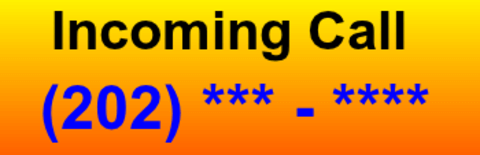
Well, at first they call you to inform you that IRS has recently audited your tax returns from a previous year and found that the return had some errors. Whomever filed the tax return filled it out incorrectly and you ended up having a larger return than you should for that year. Usually they stay in the $2000 range for the mistake made.
Then they proceed to tell you that IRS did try to notify you via certified mail but got no response back from you. Scammer may also tell you that the phone call is being recorded and being transmitted back to the attorney general’s office every so often (they told my wife it was transmitted every 30 seconds). He/She will tell you that an IRS agent accompanied by local or state police will be showing up at your door in 2 hours.

Of-course you don’t want to be arrested, so you ask how it can be fixed? This is where it gets interesting. They will tell you that they can not accept any payments from you and you will have to go to a court hearing to resolve it because IRS did not advise the person on the phone if the debt can be paid prior to hearing.
They will then tell you that they can check with the attorney general if it is at all possible for you to settle without having to go to court. Of-course, a little while later you will receive a phone call from the supposed IRS to inform you that if you pay your debt within the next 2 hours you won’t have to worry about going to jail or to court. They will give you very specific directions on how you need to pay them, usually not with a credit card but by wiring the money.
How can you tell if you have a scammer on the phone?

1. IRS will never call you and demand immediate payment, nor will they call about taxes owed without first sending you a bill.
2. IRS will never demand you pay taxes without giving you the chance to appeal the amount owed.
3. IRS will not require you to use specific method to pay your taxes.
4. IRS will also not ask for a payment over the phone using your debit card or bank account.
5. IRS will not threaten to bring in law enforcement to have you arrested for non-payment.
What to do if you get a call from someone claiming to be with IRS?

1. If you do owe taxes or think you might, call the IRS at 1-800-366-4484 to find out if the caller is an IRS employee with a legitimate need to contact you.
2. If you know you don’t owe any taxes or think someone just tried to scam you, report the incident to following authorities:
– Treasury Inspector General for Tax Administration (TIGTA) at 1-800-366-4484 or at www.tigta.gov
– Federal Trade Commission (FTC) at 1-877-FTC-HELP or at www.ftccomplaintassistant.gov by selecting the category for Scams and Rip-offs then selecting Impostor Scams
Also, remember not to give out any personal information over the phone when receiving an unsolicited phone call. Also, you can add your number to Do Not Call Registry to avoid getting solicitation calls in the first place.
This entry was posted in Blog. Bookmark the permalink.
(function( w ){
"use strict";
// rel=preload support test
if( !w.loadCSS ){
w.loadCSS = function(){};
}
// define on the loadCSS obj
var rp = loadCSS.relpreload = {};
// rel=preload feature support test
// runs once and returns a function for compat purposes
rp.support = (function(){
var ret;
try {
ret = w.document.createElement( "link" ).relList.supports( "preload" );
} catch (e) {
ret = false;
}
return function(){
return ret;
};
})();
// if preload isn't supported, get an asynchronous load by using a non-matching media attribute
// then change that media back to its intended value on load
rp.bindMediaToggle = function( link ){
// remember existing media attr for ultimate state, or default to 'all'
var finalMedia = link.media || "all";
function enableStylesheet(){
// unbind listeners
if( link.addEventListener ){
link.removeEventListener( "load", enableStylesheet );
} else if( link.attachEvent ){
link.detachEvent( "onload", enableStylesheet );
}
link.setAttribute( "onload", null );
link.media = finalMedia;
}
// bind load handlers to enable media
if( link.addEventListener ){
link.addEventListener( "load", enableStylesheet );
} else if( link.attachEvent ){
link.attachEvent( "onload", enableStylesheet );
}
// Set rel and non-applicable media type to start an async request
// note: timeout allows this to happen async to let rendering continue in IE
setTimeout(function(){
link.rel = "stylesheet";
link.media = "only x";
});
// also enable media after 3 seconds,
// which will catch very old browsers (android 2.x, old firefox) that don't support onload on link
setTimeout( enableStylesheet, 3000 );
};
// loop through link elements in DOM
rp.poly = function(){
// double check this to prevent external calls from running
if( rp.support() ){
return;
}
var links = w.document.getElementsByTagName( "link" );
for( var i = 0; i < links.length; i++ ){
var link = links[ i ];
// qualify links to those with rel=preload and as=style attrs
if( link.rel === "preload" && link.getAttribute( "as" ) === "style" && !link.getAttribute( "data-loadcss" ) ){
// prevent rerunning on link
link.setAttribute( "data-loadcss", true );
// bind listeners to toggle media back
rp.bindMediaToggle( link );
}
}
};
// if unsupported, run the polyfill
if( !rp.support() ){
// run once at least
rp.poly();
// rerun poly on an interval until onload
var run = w.setInterval( rp.poly, 500 );
if( w.addEventListener ){
w.addEventListener( "load", function(){
rp.poly();
w.clearInterval( run );
} );
} else if( w.attachEvent ){
w.attachEvent( "onload", function(){
rp.poly();
w.clearInterval( run );
} );
}
}
// commonjs
if( typeof exports !== "undefined" ){
exports.loadCSS = loadCSS;
}
else {
w.loadCSS = loadCSS;
}
}( typeof global !== "undefined" ? global : this ) );